Last updated: September 2026
KYOTO XANADU -the Blooming Phantom- Battle System Overview
Complete reference for KYOTO XANADU's Dual Dimensional battle system: 2D exploration combat, 3D arena fights, gauges, and mode transitions.
Dual Dimensional Design Philosophy
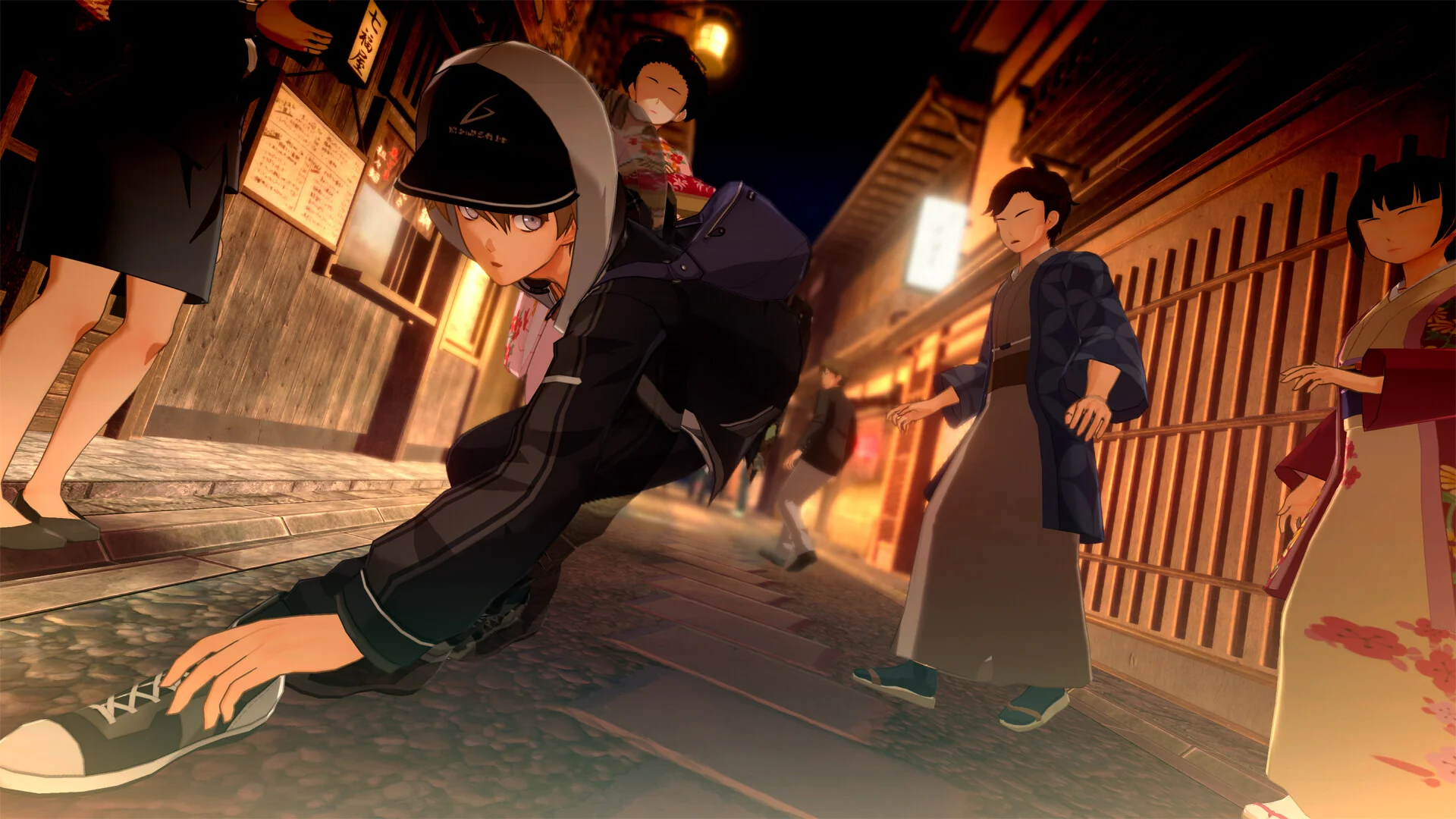
KYOTO XANADU -the Blooming Phantom- revives Falcom's classic Xanadu formula for modern hardware. Exploration and standard enemy encounters play out in 2D side-scrolling perspective, while gate-triggered segments shift to fully 3D arena combat. CEO Toshihiro Kondo has described this hybrid as a deliberate homage to 1980s Xanadu titles that switched viewpoints during boss fights, updated with physics-driven effects and seamless transitions impossible on retro platforms.
Removing manual camera control lets players focus entirely on spacing and timing — the same design goal underpinning Issen parry mastery. Whether you are platforming through a corrupted corridor or dueling a Guardian in open arena space, enemy telegraphs remain readable and combat inputs stay consistent across both dimensions.
2D Battle Mode
In 2D mode you traverse labyrinth floors with side-scrolling movement, jump physics, and wall interactions. Standard attacks chain up to three hits; aerial variants activate automatically when jumping. Spirit Bullets fire along analog stick angles rather than a reticle, making high/low diagonal shots essential for flying enemies on vertical stage geometry.
Environmental hazards tied to Guardian attributes appear prominently in 2D — fire floors, ice slides, wind gusts, and light-beam puzzles that gate progression until you equip appropriate Guardian Cards or unlock Soul Device counters. Mini-boss checkpoints occasionally lock camera scroll until clearance, functioning as soft gear checks without fully transitioning to 3D.
3D Battle Mode
Gate points within the labyrinth trigger 3D battles. Entering a gate shifts camera to arena perspective with reticle-based Spirit Bullet aiming and full Secret Arts availability. 3D encounters include multi-enemy waves, Guardian trials, and major story bosses. Strong attacks with area knockback shine here where enemies surround you from multiple angles.
Exiting 3D mode occurs automatically upon objective completion — clearing waves, defeating the boss, or surviving timed defense scripts. Unspent Secret Arts Gauge progress carries over between 3D segments in the same dive unless you return to the academy hub, so plan gauge spending when back-to-back gates appear on map previews.
Core Actions Reference
Standard Attack: three-hit Soul Device combo with unique aerial chain. Strong Attack: character-specific finisher combinable from standard chains. Dodge: invincibility frames with learnable aerial and attack variants. Jump: variable height hold with double jump and wall kick unlocks. Shooting: Spirit Bullets consuming Shoot Gauge; Special Bullets add elements. Guard: damage reduction with parry window on precise timing.
Soul Accel: temporary power state when Accel Gauge maxes; enhances Strong attacks and parry leniency. Issen: counterattack prompt after parrying red-telegraph specials. Secret Arts: screen-wide 3D-only attack when Secret Arts Gauge fills. Each action interacts with gauges documented on dedicated pages for Soul Accel, Issen, and Secret Arts.
Gauges and Flow
Four gauges orchestrate advanced play. HP and Shoot Gauge are always visible. Accel Gauge fills from combat aggression and damage taken, enabling Soul Accel. Secret Arts Gauge fills from dealing damage, spent exclusively in 3D. Guardian Card effects may modify fill rates — consult loadout guides before boss attempts.
Optimal flow strings basic combos into Accel activation, baits red telegraphs during Soul Accel, Issen counters for burst damage, then spends Secret Arts on add phases. In 2D exploration, conserve Shoot Gauge for aerial enemies while building Accel passively through guard baiting on weaker grunts.